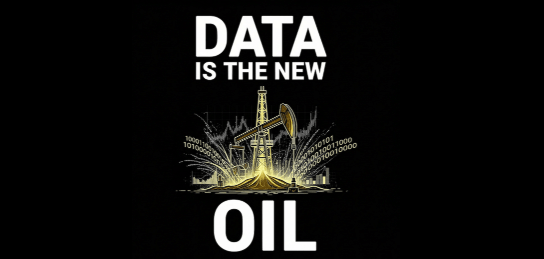
The phrase “data is the new oil” frames data as a driver of value, yet the comparison masks essential gaps. Data is pervasive, non-rival, and context-sensitive, demanding governance, quality controls, and clear rights to access and share. Its true impact hinges on disciplined stewardship, not mere extraction. Ethical, privacy, and policy considerations shape trust and reuse. The question remains: how should organizations align data strategy with governance and value creation, without oversimplifying the metaphor?
What the “Data as Oil” Analogy Gets Right
The “data as oil” analogy highlights three core parallels: both data and oil are inputs that enable value creation, both require significant refinement and processing to become actionable, and both are subject to asymmetries in access and control.
In this frame, data ownership clarifies rights, while data monetization defines pathways.
Strategic governance unlocks scalable value, aligning freedom with responsible data stewardship.
Where Data Falls Short as a Resource
Data falls short as a resource when considering scope, control, and value capture. The analysis highlights data scarcity and data fragmentation, challenging data accessibility and interoperability. Data ownership structures influence incentives, while data bias and gaps in data lineage hinder trust.
Standardization efforts improve interoperability, yet fragmentation persists; disciplined governance and transparent capture are required to convert data into scalable, strategic value without overclaiming oil-like certainty.
Turning Data Into Value: Governance, Quality, and Context
Turning data into value hinges on disciplined governance, rigorous quality management, and contextual framing that aligns data assets with decision-making needs.
Data governance structures enable traceability and accountability, while data quality ensures accuracy, completeness, and consistency.
Data context shapes relevance, enabling proactive insights aligned with data strategy ethics, policy considerations, and data privacy, guiding strategic choices for sustainable value creation.
The Roles of Ethics, Privacy, and Policy in Data Strategy
Ethical considerations, privacy protections, and policy alignment shape how data assets are sourced, managed, and utilized within a strategic data program. The roles of ethics governance and a robust privacy policy establish guardrails that balance innovation with risk containment, enabling transparent decision-making, accountable data stewardship, and compliant value extraction.
Data governance metrics monitor adherence, while adaptable policy frameworks sustain long-term strategic freedom.
See also: Data Governance in a Digital World
Frequently Asked Questions
Does Oil-Like Data Wealth Benefit Everyone Equally?
It depends; data wealth does not automatically equal equitable benefits. Data ownership structures and governance shape distribution, enabling inclusive access and returns. Strategic frameworks and technical controls can mitigate disparities, but broad access requires deliberate policy, transparency, and interoperable data ecosystems.
Can Data Ownership Be Truly Decentralized and Fair?
Data ownership cannot be truly decentralized and fair at present; centralized incentives still dominate. Yet data sovereignty frameworks and fair compensation models could align value, governance, and rights, guiding scalable, freedom-oriented, data-driven strategies toward more equitable outcomes.
How Do Cultural Biases Shape Data-Driven Decisions?
Cultural biases shape data-driven decisions by creating blind spots and influencing model outcomes; algorithmic empathy attempts to mitigate this by aligning analytics with diverse perspectives, though persistent cultural blind spots require ongoing auditing, governance, and transparent, freedom-oriented data practices.
What Risks Emerge From Data Monoplies and Gatekeeping?
Data monopolies risk suppressing diverse insights and hindering innovation; gatekeeping narrows access, elevates value extraction for a few. Strategic, data-driven analysis shows centralized control concentrates leverage, amplifying systemic fragility and constraining freedom to innovate and compete.
Is There a Universal Metric for Data Value?
A winding bridge spans uncertainty; there is no universal metric for data value. Data value varies by context, goals, and governance. Analysts emphasize standardized metrics yet acknowledge contingent, strategy-driven assessments rather than a single universal metric.
Conclusion
The data landscape hardens like a dawn-lit refinery, gleaming with potential yet haunted by leaks and waste. Data is not a finite ore but a mutable stream—valuable when curated, governed, and contextually refined. Without disciplined governance, quality controls, and privacy safeguards, the pipeline churns and corrodes trust. When treated as a strategic asset with ethical guardrails, data yields transparent, scalable value. In this spectrum, data is less “oil” than an evolving framework for responsible stewardship.